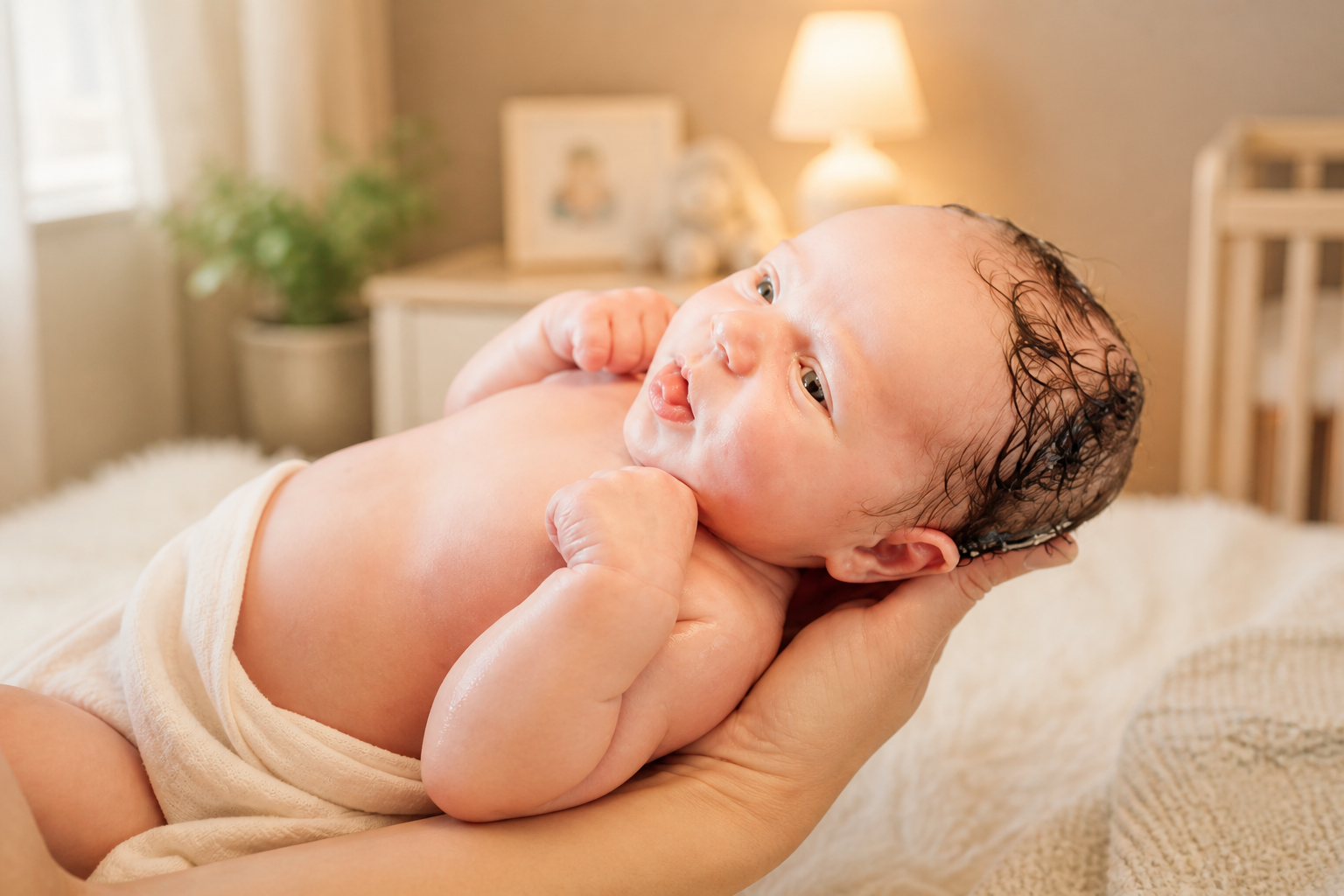

The growth and development of a newborn baby is very rapid and full of important changes in the first few weeks of life. The baby’s weight may decrease slightly after birth, but it usually increases again within two weeks. During this time, the baby sleeps most of the day, about 16 to 18 hours, and wakes up mainly to eat. Parents can notice early signs in the baby, such as reflexes, response to light, and response to sound. These early signs indicate that the baby’s brain and body are adapting to the new environment. Proper breastfeeding, hygiene, and regular care play a major role in the healthy development of the baby.
Pediatricians consider the newborn period to be the most sensitive period in life. During this stage, the baby’s vision, hearing, movement, and emotional responses gradually develop. Regular feeding helps in gaining weight and strengthening the immune system. Sleep patterns also help in brain growth and physical recovery. Parents should observe the crying pattern and body language to understand the baby’s needs. Weekly changes in behavior help monitor a child’s healthy development and identify any problems early. Affectionate interactions, talking, and skin-to-skin contact also enhance emotional bonding and learning. Consistent care ensures a strong foundation for a child’s future growth and overall well-being.
how long is the newborn stage
Newborn stage usually refers to the first 28 days (4 weeks) after the baby is born. During this period, the baby’s body quickly adapts to the new environment. Sleeping, eating, crying, and skin changes are very normal. Many babies sleep 16-18 hours a day and want to drink milk repeatedly. During the newborn stage, the baby’s immune system is weak, so cleanliness and care are very important.
During this newborn stage, the baby’s weight gain, umbilical cord care, and proper skin care are very important. Parents should breastfeed the baby regularly and observe changes in the baby’s urine and stool. Sometimes the baby may have flatulence, hiccups, or gas during the newborn stage, which is normal. Therefore, the baby needs to be cared for in a calm environment. With proper care, the baby’s growth starts better after the newborn stage ends and it is easier to pass the newborn stage.
Newborn Baby Growth
Newborn Baby Growth means the rapid changes and development of the baby’s body and brain in the first few weeks after birth. During this time, many new changes are seen in the baby’s weight, height, head circumference and daily behavior. Sometimes the baby’s weight may decrease slightly, and then it starts to grow slowly after a few days. The growth of the newborn is not only physical, but also manifested through his sleep, eating habits, crying, eye contact and reaction to surrounding sounds. During this time, proper breastfeeding, adequate sleep and regular care are very important for the healthy growth of the baby.
1. Weight Gain
A newborn baby may lose weight slightly in the first 3 to 5 days after birth, which is normal. Usually, the baby’s weight returns to its previous state within 10 to 14 days of birth. After that, the baby’s weight gradually increases and increases by a few grams every week. If the baby is properly fed breast milk or formula milk, the weight gain rate is good. Weight gain means that the baby’s body is getting nutrition and its organs are working properly.
2. Height Growth
After birth, the baby’s height increases gradually and can usually be seen growing by 1 to 2 inches in the first month. The baby’s bones and muscles start developing rapidly, which starts the process of growing taller. The size of the baby’s feet and hands also gradually increases. The most important thing for height growth is adequate nutrition and proper sleep. When the baby’s body is in deep sleep, its growth hormone works more, which helps in height growth.
3. Head Circumference
The growth of the newborn’s head circumference is an important growth sign. Because the baby’s brain grows rapidly and with it the size of the head also gradually increases. In the first few weeks after birth, the head circumference is seen to increase a little faster. Sometimes the baby’s head is slightly depressed at birth, which normalizes within a few days. Proper growth of the head circumference means that the baby’s brain development is on the right track.
4. Feeding Increase
In the first few days, the newborn drinks milk little by little, but within a few weeks, his need for food increases. Because the baby’s stomach is small, it is necessary to feed milk repeatedly. Usually, babies can feed milk up to 8 to 12 times a day. Increasing the amount of food is important for the baby’s growth and strength. Regular consumption of milk helps the baby gain weight quickly and the body’s immunity also improves gradually.
5. Sleep and Growth
Newborn babies usually sleep for 14 to 17 hours a day. This sleep is the most important time for the baby’s growth. Because the baby’s body recovers itself during sleep and the growth hormone works. Many times the baby’s sleep is irregular, sleeping more during the day and staying awake at night – this is also normal. However, the better the sleep, the faster the baby’s growth and brain development will be.
6. Movement and physical strength (Movement Development)
Even if the baby first moves his arms and legs after birth, it is irregular. Within a few weeks, the baby’s movements of his arms and legs start to become stronger and more active. The baby sometimes holds his hands in a fist, sometimes kicks his legs or bends his body. These movements indicate the development of his muscles and nervous system. Over time, the baby gradually learns to lift his head slightly, which is an important sign of increasing neck strength.
7. Vision Growth
A newborn baby’s vision is not very clear after birth. In the first few weeks, the baby can usually see close objects and gradually learns to focus his eyes. Babies especially notice the mother’s face or bright lights more. Over time, the baby’s eye movement improves and he gradually starts looking at different objects. This is an important part of the baby’s brain development and neurological growth.
8. Crying and Response
A newborn baby expresses his needs through crying. At first, crying may be less, but within a few weeks, crying becomes a little more, as the baby’s needs increase. The baby cries when he is hungry, sleepy, uncomfortable or has a wet diaper. In addition, the baby gradually learns to respond to sounds. For example, being startled by loud noises or calming down when hearing the mother’s voice. These are part of the baby’s mental and neurological growth.
Newborn Baby Health
Ensuring Newborn Baby Health is very important for every new parent. After birth, the baby’s body gradually adapts to the environment, so cleanliness, breastfeeding and adequate sleep are the foundation of the baby’s well-being. Regular diaper changes, umbilical cord care and keeping the baby’s skin clean are essential. In addition, many problems can be understood in advance by observing whether the baby’s temperature is right, whether breathing is normal and the pattern of crying. To maintain good Newborn Baby Health, it is necessary to always keep the baby in a comfortable environment.

Timely vaccination and doctor’s consultation are essential to maintain Newborn Baby Health. Monitoring the baby’s weight gain, regularity of urination and defecation and the amount of food consumed can help understand the state of health. If symptoms such as fever, shortness of breath, excessive sleep, not wanting to eat or yellowing of the skin appear, then you should seek medical help immediately. Proper care and love improve the baby’s Newborn Baby Health and create a strong foundation for the future. Newborn Baby Health needs to be looked after consciously every day.
Weekly Activity for Your Newborn Baby
Understanding the Weekly Activity of a newborn baby makes it much easier for parents to take care of their baby. In the first few weeks after birth, the baby’s body and brain develop very rapidly. During this time, small changes in the baby’s sleep, eating, crying, moving his arms and legs, eye contact and responding to sounds are important signs of his normal growth. Therefore, it is very important to know how the baby’s habits and activities are changing every week, as it helps to give a correct idea of the baby’s health and development.
1st Week
This week, the main task of the newborn baby is to sleep and breastfeed. Usually, the baby can sleep up to 16-20 hours a day. Most of the time, the baby’s eyes are closed, but sometimes he opens his eyes and tries to look at the surrounding light or face. The baby may cry more this week, because he expresses his hunger, discomfort or need for sleep through crying. It is also normal for the baby to move his arms and legs and give light shakes.
2nd Week
In the second week, the baby’s food intake increases slightly and he may ask for milk more often than before. During this time, the baby’s sleep routine is gradually developing, although not yet regular. Some reflexes such as clenching the hands, trying to suck and being startled by sudden sounds are more common. Many babies’ eyes are now open a little longer and they begin to notice light or movement.
3rd Week
In the third week, the baby’s movements become more active. He moves his arms and legs more and sometimes changes his facial expressions. At this time, the baby may cry a little more, because many babies have gas or stomach discomfort. However, at the same time, the baby gradually learns to recognize the mother’s voice and begins to calm down with familiar smells or touches. Many babies also show reactions such as small smiles on their faces, although this is mostly due to reflexes.
4th Week
In the fourth week, the baby’s eyesight improves compared to before and he looks more at his mother’s face or bright objects. The baby’s neck strength begins to increase a little and he tries to lift his head slightly when lying on his stomach. The baby’s crying patterns may also vary during this time—the parents can understand it to some extent as hunger, sleep, or discomfort. When you talk to or smile at the baby, he may sometimes respond with sounds or facial expressions.
5th Week
This week, the baby’s ability to hear sounds becomes more active. He may startle when he hears loud noises or calm down when he hears his mother’s voice. Some regularity is established between the baby’s sleep and eating, although this is not yet completely fixed. The baby’s hand and foot movements increase and he sometimes brings his hand to his mouth. Regular talking to the baby and making eye contact during this time helps a lot in the development of his brain.
6th Week
At six weeks, the baby begins to develop social reactions. Many babies can smile lightly at this time and look at familiar faces for a long time. He now tries to follow sounds or lights. The baby’s kicking movements also increase, which is a sign of muscle strengthening. However, many babies cry more this week, which is called “Growth Spurt Crying”.
7th Week
In the seventh week, the baby’s interest and awareness increases. He may try to turn his head when he hears sounds around him. Many babies pay attention to toys or moving objects. During this time, the baby’s sleep time decreases slightly and he may stay awake for longer. The baby’s facial expressions become clearer and he gradually learns to express his feelings through smiles or words.
8th Week
In the eighth week, the baby’s body and brain develop more rapidly. He is now awake for longer than before, looks more and can recognize familiar faces. Many babies smile and express joy at this time. The strength of the neck increases, resulting in the ability to lift his head while lying on his stomach. Activities such as trying to catch something with his hands and reaching for toys can also be seen.
It is easy to understand the normal growth of a newborn baby by observing his Weekly Activity. Not every child develops at the same rate, so it is most important to regularly monitor your child’s changes without comparing them to other children.
Newborn Baby Sleep Pattern
Newborn Baby Sleep Pattern is usually irregular in the first few weeks after birth. Newborns can sleep for about 14 to 17 hours during the day and night, but they do not sleep for long periods of time. Most of the time, they sleep for 2–3 hours and wake up again to eat. To understand Newborn Baby Sleep Pattern, it is important to note that the baby’s comfort and eating routine is more important than the time of sleep. Many times, the baby can be awakened by noise, light or a wet diaper.
Newborn Baby Sleep Pattern gradually becomes somewhat regular in the first 1–2 months. Keeping the baby in light during the day and making the environment quiet and dark at night helps to understand the difference between day and night. To maintain the Newborn Baby Sleep Pattern, it is important to feed the baby before going to bed, put on a clean diaper and wear comfortable clothes. Remember, each baby’s Newborn Baby Sleep Pattern may be different, so it is best to observe patiently.
Newborn Baby Crying
Newborn Baby Crying is a normal behavior of a newborn baby, through which he expresses his needs. Babies usually cry when they are hungry, have a wet diaper, have trouble sleeping, have stomach ache, have gas, or feel too cold or hot. Many times, crying increases even if they are not in their parents’ lap or are disturbed by excessive noise and light. Therefore, to understand Newborn Baby Crying, it is important to observe the baby’s routine and body signals.
Breastfeeding the baby, wearing clean diapers, rocking lightly, and creating a calm environment are very effective in reducing Newborn Baby Crying. If the baby’s stomach is gassy, gently pat the back and burp it. In addition, the warmth and gentle touch of the mother’s body provide security to the baby. If Newborn Baby Crying continues for a long time or fever, shortness of breath, or unusual symptoms are seen, then you should consult a doctor immediately. Newborn Baby Crying gradually comes under control with patience and good care.
What should a newborn baby’s vision be like?
What should a newborn’s vision be like? A newborn’s vision is very limited at birth. A newborn can only see very close objects, usually at a distance of 20–30 cm. At this stage, the newborn prefers high-contrast colors and blurry shapes. A newborn’s vision gradually improves with brain development. Parents should know that the baby responds more to faces and light than to detailed objects.

A baby’s vision develops rapidly in the first few months. During this time, he begins to follow moving objects. Soft light and high-contrast toys help improve vision. Parents can interact with the baby by showing the face up close and gently moving the object. By three months, eye coordination improves and the baby begins to pay better attention to the things around him. This stage is very important for the growth of the connection between vision and the brain. It develops over time.
Newborn Baby Brain Development & Learning Ability
Newborn babies’ brains start developing rapidly from birth. Their learning abilities are very basic but very important during the newborn period. Newborn babies learn from sounds, touch and facial expressions. Proper care and a good environment strengthen newborn brain development. Listening to and loving parents during the newborn period helps to increase the baby’s learning ability.
The first few months are very important for the development of the baby’s brain. During this time, regular talking, singing and eye contact increase the baby’s learning ability. A safe environment and nutritious milk help the baby’s mental and physical development. Gradually, the baby learns to recognize words and starts adapting to the surrounding environment.
Newborn Baby growth chart
Newborn Baby Growth Chart (0–12 Months)
| Age | Weight (Avg) | Length/Height (Avg) | Head Circumference (Avg) |
|---|---|---|---|
| Birth | 2.5 – 4.0 kg | 48 – 52 cm | 33 – 35 cm |
| 1 Month | 3.2 – 4.8 kg | 50 – 55 cm | 35 – 37 cm |
| 2 Months | 4.0 – 5.8 kg | 54 – 58 cm | 37 – 39 cm |
| 3 Months | 4.5 – 6.4 kg | 57 – 62 cm | 38 – 41 cm |
| 4 Months | 5.2 – 7.2 kg | 60 – 65 cm | 40 – 42 cm |
| 5 Months | 5.8 – 7.8 kg | 62 – 67 cm | 41 – 43 cm |
| 6 Months | 6.2 – 8.5 kg | 64 – 70 cm | 42 – 44 cm |
| 7 Months | 6.6 – 9.0 kg | 66 – 72 cm | 43 – 45 cm |
| 8 Months | 7.0 – 9.5 kg | 68 – 74 cm | 43 – 46 cm |
| 9 Months | 7.3 – 10.0 kg | 69 – 75 cm | 44 – 47 cm |
| 10 Months | 7.6 – 10.5 kg | 70 – 77 cm | 44 – 47 cm |
| 11 Months | 7.8 – 11.0 kg | 72 – 78 cm | 45 – 48 cm |
| 12 Months | 8.0 – 11.5 kg | 74 – 80 cm | 45 – 48 cm |
Note: These are average ranges. Every baby grows differently. If you are worried about growth, consult a pediatrician.
Products You Need This Week
Choosing the right products is very important in newborn baby care. This is my keyword This is 5 bar daw This is my keyword .This is my keyword This is 5 bar daw At this time, diapers, clothes, baby wipes and safe skin care products are needed. Parents should choose products suitable for daily use. With the right planning, the needs of the newborn can be easily met Safely ensured
Some essential things should be prepared for the newborn baby every day. This is my keyword This is 5 bar daw These include baby diapers, soft clothes, feeding bottles and creams. These products play an important role in protecting the comfort and health of the baby. This is my keyword This is 5 bar daw Selecting quality products for regular use reduces the baby’s skin problems to a great extent and increases safety is very important Proper care and use of necessary products ensure the health and comfort of the newborn and grow well every day
Newborn Baby Parent Tips
Taking care of a newborn baby can be both a joy and a source of worry for a new parent. During this time, the baby is completely dependent on the parents, so proper care, love, and a regular routine are very important. Proper sleep, feeding, hygiene, and health monitoring of the baby in the first few months can ensure its healthy growth. Below are some important parenting tips that will be very helpful for new parents.
Proper Feeding Routine
It is very important to feed the newborn baby at regular times. Usually, the baby should be given breast milk or formula every 2-3 hours. This ensures proper nutrition for the baby and helps him grow quickly and healthily. The baby should be held comfortably during feeding so that he can drink milk easily.
Safe Sleeping Position
The position of the baby while sleeping is very important. The newborn should always be placed on his back so that there is no problem in breathing. Extra pillows or toys should not be placed on the bed, as this can pose a risk of accidents. A calm and safe environment ensures a good sleep for the baby.
Hygiene and Cleanliness
It is very important to change the baby’s diaper regularly and keep the body clean. Hands should be cleaned after every feeding or before sleeping. Maintaining cleanliness reduces the chances of infection or skin problems.
Regular Health Checkup
The health of the newborn baby should be checked regularly by a doctor. Vaccinations and weight monitoring are very important. This allows any problems in the baby to be identified early and action can be taken quickly.
Emotional Bonding
Spending time with the baby, talking and cuddling are very important for his emotional development. The touch and love of the parents make the baby feel safe and help in his emotional development.
Conclusion
Newborn baby growth and development require continuous care, attention, and understanding from parents. Every baby develops at a different pace, so comparing with others is not necessary. Monitoring weight, sleep, feeding, and behavior helps parents ensure healthy progress. Early signs such as eye contact, crying patterns, and movement provide important clues about development. A calm and loving environment supports both physical and emotional growth. Proper breastfeeding and hygiene play a key role in preventing health issues and ensuring comfort for the baby.
It is important for parents to stay patient and observe daily changes in their newborn’s behavior. Small improvements in sleep, feeding, and movement indicate healthy development over time. Regular checkups with doctors ensure that the baby is growing properly and receiving necessary vaccinations. Emotional bonding through talking, touching, and holding the baby builds trust and security. A safe environment free from stress, noise, and harmful factors helps the baby rest well and grow faster. Parents should always trust natural growth patterns and focus on providing love, care, and nutrition. With proper attention, the newborn stage becomes a strong foundation for lifelong health and happiness. Love and consistency are the key to healthy newborn development every single day always.