
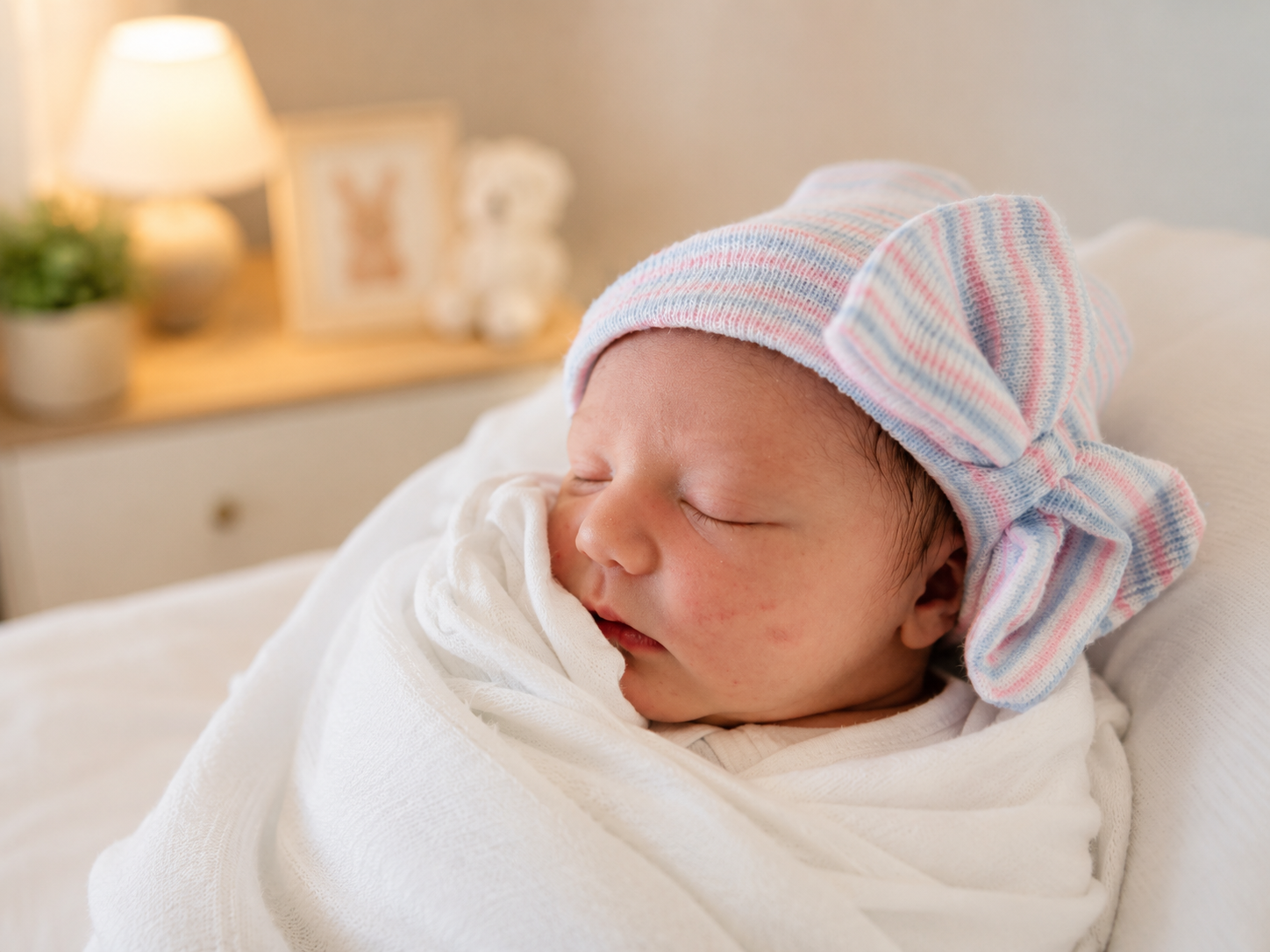

1 Week Old Baby During this time, the baby’s body undergoes rapid changes. The baby may lose weight slightly in the first week after birth, but this is normal and will gradually start to gain weight again. 1 Week Old Baby usually sleeps 16-18 hours a day and wakes up in between sleep. At this time, the baby’s crying is the main means of communication, as he cries to express hunger, discomfort or the need for sleep. Blinking at light or being startled by sounds are also normal reactions at this age.
The 1 Week Old Baby’s sensory abilities gradually develop. He can focus on a nearby face or bright light and learns to recognize his mother’s smell. 1 Week Old Baby can use his lips and mouth movements correctly while breastfeeding. In addition, he can move his arms and legs, clench his fingers and turn his head slightly according to the reflex. It is very important for 1 Week Old Baby to feed regularly, ensure adequate sleep and a comfortable environment during this time.
1 Week old Baby Growth
Baby Growth refers to the physical changes of a 1-week-old baby. In the first few days after birth, the baby’s weight may decrease slightly, which is completely normal. Usually, the baby’s weight starts to increase again slowly within 5-7 days. During this time, the baby’s skin is soft, the face may be slightly swollen, and the hands and feet may feel cold at times. However, regular breastfeeding helps Baby Growth progress well and the baby’s body starts to strengthen.
At the age of 1 week, the baby sleeps the most, up to about 16-18 hours. Baby Growth can be understood by watching the baby’s crying, movement, and the amount of milk consumed. At this time, the baby should urinate 6-8 times a day and the stool may also be regular. Mother’s milk is the most important for the baby, because it increases the baby’s immunity and ensures rapid Baby Growth. Therefore, it is important to feed the baby repeatedly and take care of it. Regular checkups give a clear idea about Baby Growth.
1 Week old Baby Emerging skills
Baby Emerging skills New skills gradually begin to appear in a 1-week-old baby. At this time, the baby’s eyes respond a little more to light and try to look at nearby objects or the mother’s face. Sometimes he may be startled by sounds or react by moving. At this stage, the baby’s ear-eye coordination gradually improves, which is an important part of the development of Baby Emerging skills.
At this age, it is normal for the baby to move his arms and legs, clench his fingers and try to raise his head slightly while lying on the chest. Recognizing the mother’s smell or voice and trying to calm down are also among the Baby Emerging skills. In addition, the baby expresses hunger, discomfort or the need for sleep through crying, which is the initial stage of his communication skills. Regular caress and talking helps the Baby Emerging skills develop more quickly and the baby’s mental development also starts well.
how long is the newborn stage
Newborn stage usually refers to the first 28 days (4 weeks) after birth. During this period, the baby’s body quickly adapts to the new environment. In the newborn stage, the baby sleeps most of the time, wants to drink milk frequently, and it is normal to cry lightly. In addition, the baby’s weight may decrease a little during this time, but it gradually returns to normal. Therefore, the newborn stage is the most sensitive and important period in the baby’s life.
In this newborn stage, it is especially important to ensure cleanliness, breastfeeding, and adequate rest in the care of the baby. This time is also full of new experiences for parents, because the baby’s sleep and eating routine is not properly established. It is good to have regular medical checkups and observe the baby’s behavior during the newborn stage. Overall, the newborn stage is the first stage of a baby’s growth, where good care provides a solid foundation for the baby’s health.
1 Week Old Baby Health
It is important for new parents to be most aware of 1 Week Old Baby Health. In the first week after birth, it is necessary to observe whether the baby’s sleep, amount of milk intake, number of urinations and bowel movements are normal. Usually, the baby sleeps 16-18 hours a day and wants to drink milk every 2-3 hours. To maintain good 1 Week Old Baby Health, it is important to observe whether the baby’s body temperature is normal, whether the umbilical cord is dry and whether there is any rash on the skin.

Although mild jaundice is normal at this time, a doctor should be seen if the baby becomes very yellow. In addition, if the baby cries a lot, does not drink milk, has difficulty breathing or has a fever, immediate treatment should be sought. To ensure 1 Week Old Baby Health, it is important to keep the baby clean, breastfeed regularly and create a safe sleeping environment. Regular monitoring can maintain 1 Week Old Baby Health better. Therefore, even small changes in daily life should be taken seriously.
How many wet diapers should my 1 week old baby have a day?
It is very important to know how many wet diapers a 1 week old baby should have per day. Usually, a 1 week old baby will have at least 6 to 8 wet diapers per day. If the baby is eating breast milk or formula properly, then the amount of urine will also be normal. If the diapers are regularly wet and the urine is light yellow in color, then you will know that your 1 week old baby is getting enough milk.
If your 1 week old baby has less than 5 wet diapers per day or the urine is dark yellow, then this may be a sign of dehydration. Also, if the baby has a dry mouth, sleeps a lot, or drinks less milk, then you should see a doctor quickly. A healthy 1 week old baby will have regular wet diapers and will also gain weight gradually. Therefore, it is very important to monitor the diapers daily.
Timely matters for a 1 week old baby
Timely care for a 1-week-old baby is very important, because at this time the baby’s body quickly adapts to the new environment. Feeding, sleeping, changing diapers, and maintaining cleanliness on time keep the baby healthy. In addition, regular monitoring by parents helps to quickly understand any problems in the baby. At this age, every small change in the baby is important, so maintaining a daily routine on time is most important for the baby’s growth and safety.
1. Feeding Time
Timely feeding is the most important thing for a 1-week-old baby. Usually, the baby needs to be given breast milk or formula every 2-3 hours. Because at this age, the baby’s stomach is very small and gets hungry quickly. If the baby does not get milk on time, the baby’s body may lose water and there is a risk of weight loss. So it is better to try to feed the baby before he cries.
2. Sleeping Schedule
At this age, the baby usually sleeps 16-18 hours a day. However, sleep is not for long periods at a time, but for short periods. Therefore, parents need to understand that it is necessary to create a routine for the baby’s sleep. If the baby does not get enough sleep, the baby’s mood may become irritable and the body may feel weak. It is important to put the baby to sleep in a calm environment and gradually explain the difference between night and day.
3. Diaper Change (Timely Diaper Change)
It is very important to change the diaper of a 1-week-old baby regularly. Usually, the diaper can get wet 6-8 times or more a day. Leaving a wet diaper for a long time can cause a rash on the baby’s skin and increase the risk of infection. Therefore, the diaper should be changed quickly after each urination or defecation and the skin should be dried thoroughly and then a new diaper should be worn.
4. Bathing & Hygiene (Maintaining cleanliness)
It is not mandatory to bathe the baby every day at the age of 1 week. However, it is important to keep the baby’s body clean. Especially the face, neck, hands and feet and the diaper area should be cleaned regularly. At this time, the baby’s umbilical cord is dry, so it is very important to keep it dry and clean. Urgent treatment may be required if the navel becomes infected.
5. Body Temperature
At this age, the baby’s body cannot regulate its temperature. So, both cold and hot are risky for the baby. The baby should be dressed according to the weather and should not be overheated by wearing too many clothes. If the baby’s body feels too hot, sweats or has cold hands and feet, then immediate action should be taken. Timely temperature control helps keep the baby healthy.
6. Baby Crying & Comfort
A 1-week-old baby expresses his needs through crying. Crying does not always mean hunger – it may be a wet diaper, a need for sleep, stomachache or colic, or just a need to be held. Understanding the reason for the baby’s crying and taking action in a timely manner increases both the baby’s safety and emotional comfort. This also strengthens the bond between the parents and the baby.
7. Doctor Checkup & Warning Signs
Regular monitoring of the baby is very important during this period. If your baby doesn’t want to drink milk, is unusually sleepy, has a high fever, has difficulty breathing, has yellow skin, or has less wet diapers, you should contact your doctor immediately. Because small problems at 1 week of age can quickly become big problems. Timely treatment can save your baby from major dangers.
Sleep Routine for a 1 week old baby
Sleep Routine for a 1 Week Old Baby
A 1-week-old baby usually sleeps 16–18 hours a day in short cycles. This routine is a simple guide to help parents plan feeding, sleeping, and diaper changes.
Umbilical Cord Care and When Will It Fall Off?
Umbilical Cord Care is very important for newborns, because if it is not kept clean properly, it can cause infection. After birth, the umbilical cord part dries out and turns black and gradually hardens. Always clean your hands and keep the cord area dry while doing Umbilical Cord Care. Do not apply any kind of powder, oil or household items to the umbilical cord part, as this can increase the risk of bacterial infection.
Usually, the umbilical cord falls off on its own within 7 to 14 days, but in some babies it may take up to 3 weeks. If Umbilical Cord Care is done properly, it dries quickly. While wearing diapers, care should be taken that the diaper does not cover the umbilical cord part. If there is a bad smell, pus, excessive bleeding or redness from the umbilical cord, then you should consult a doctor immediately. Regular Umbilical Cord Care keeps the baby safe and helps it recover quickly. Umbilical Cord Care should always be done carefully.
Should parents be worried about their child’s stool being green?
Many parents are worried about the color of their child’s stool, especially when they see their child’s stool being green. In general, a child’s stool being green is sometimes normal because it can be caused by a change in diet, breast milk or formula milk. However, a child’s stool being green does not always indicate a serious problem, but can also be the result of changes in the digestive process.
However, if the child has diarrhea, fever or excessive discomfort, then the child’s stool being green should be taken seriously. Although sometimes a child’s stool being green is normal, it is better to consult a doctor if it continues for a long time. Proper diet and adequate water help keep the child’s digestion normal and can reduce this problem. Therefore, it should be observed without panic, because in many cases it is only a temporary change. Still, it is important to be aware. If necessary, seek medical advice. Monitor the child’s health. Regular monitoring is important.
Why is parental touch important for babies?
Parental touch plays a very important role in the development of a child. This parental touch increases the child’s emotional security and keeps him calm. Regular parental touch helps in the development of the child’s brain and strengthens the emotional bond. Newborns learn to respond well through parental touch. It helps in the growth of the child’s body and improves the quality of sleep. Parental touch makes the child confident and increases the feeling of bonding. It is very helpful in the child’s mental development. Brings peace to the family. Beneficial.

Parents’ affection and touch are very necessary for the healthy development of the child. It increases the child’s mental stability and security. Regular touch has a positive effect on the development of the child’s brain. The child easily develops a sense of trust and love. It improves the quality of sleep and reduces crying. The child’s being with parents reduces the stress. Thus, the child’s physical and mental development is accelerated. A good environment in the family plays a very important role for the child. A happy future.
How are the arms and legs of a 1 week old baby moving?
1 week old baby moving is usually very soft and normal. At this age, the baby’s arms and legs cannot move completely in a controlled manner, but rather, there are slight jerks or sudden movements due to reflexes. Many times, they are seen moving their arms and legs a little while sleeping, which is completely normal. 1 week old baby moving at this time mainly occurs as part of the development of the nervous system. If parents observe, they will see that the baby’s fingers are clenched and sometimes open.
At this age, 1 week old baby moving is more visible when they are hungry, uncomfortable or have a wet diaper. Stretching their arms and legs a little, then folding them back again—these are very normal behaviors. Gradually, their muscles start to strengthen, so 1 week old baby moving will become more coordinated. So there is nothing to worry about this movement, rather it is an important sign of healthy growth.
Eye reactions in a 1 week old baby
A one-week-old baby’s eyes are not yet fully developed, so eye reactions can often appear erratic. At this time, eye reactions can change rapidly to light, movement, or sound. Many parents notice that eye reactions sometimes lose focus or tremble slightly, which is completely normal. Gradually, as the baby’s eyes develop, eye reactions begin to become more stable.
During the first week, the baby’s eye reactions are trying to adapt to the environment, so they may be a little unstable. Over time, eye reactions will become clearer and more controlled, which is a normal part of the baby’s vision development. Parents should monitor them regularly.
Doctor Checkup & First Week Health Monitoring
The first week of a newborn baby is one of the most sensitive periods. During this time, the baby’s body is adapting to the new environment, so regular health monitoring and doctor checkups are very important. Even small changes in the first few days after birth can be an indication of a bigger problem, so parents should keep an eye on every physical and behavioral change in the baby. Timely doctor consultation helps ensure the healthy growth of the baby. Doctor checkups and health observations in the first week:
1. First doctor checkup after birth
It is very important to have the first doctor checkup within 24 to 48 hours of the baby’s birth. At this time, the doctor checks the baby’s heartbeat, breathing, weight and overall physical condition. It is initially detected at this time whether there are any congenital problems. This checkup creates a health baseline for the baby for the future.
2. Jaundice (Yellow Skin) Monitoring
Many newborns may develop mild jaundice in the first week. Although this is normal, it is important to pay attention to changes in the color of the eyes and skin. If the jaundice is severe, the doctor may recommend phototherapy or other treatments. Therefore, it is necessary to regularly monitor the baby’s color and behavior.
3. Weight gain and feeding monitoring
The baby may lose a little weight in the first week, which is normal. However, it is important to monitor whether he is breastfeeding regularly and getting enough milk. The doctor usually ensures the baby’s nutrition through feeding schedules and weight tracking.
4. Diaper and urine monitoring
The number of times the baby urinates and defecates during the day is an important indicator of health. If the diapers are wet less or the stools are of an unusual color, it can be a sign of dehydration or other problems. Therefore, it is important to monitor the number and condition of diapers every day.
5. Temperature and infection sign check
It is very important to keep the newborn’s body temperature stable. Fever, excessive sweating, or feeling very cold—these signs indicate going to the doctor quickly. It is important to identify any signs of infection quickly in the first week.
6. Sleep and behavior monitoring
Newborns usually sleep 16–18 hours a day. However, both excessive and insufficient sleep can be problems. Observing the baby’s crying, sleep pattern, and ability to respond can give an idea of his neurological development.
Regular doctor follow-up and proper monitoring in the first weeks lay the foundation for a healthy life for the baby. The more care is taken during this time, the safer and healthier the baby’s growth will be in the future.
When should you see a doctor urgently in the first week?
It is very important for parents to pay attention to any unusual symptoms in the newborn’s body in the first week. If the baby has difficulty breathing, fever, reluctance to eat or excessive sleepiness, then a doctor should be consulted urgently. In such a situation, taking quick action without delay is safe for the baby. Sometimes even small problems can quickly become serious, so it is very important to be vigilant. A doctor should be considered urgently if any suspicious changes are seen. It is important to make quick decisions to ensure the health and safety of the baby.
Also, the baby’s skin turning yellow, not eating at all or crying excessively for no reason can be an indication of a serious problem. In these cases, a doctor should be contacted urgently. If the baby’s body temperature suddenly drops or rises too much, then it is necessary to consult a doctor urgently without waiting. The condition of the newborn can change rapidly in the first week, so it is important for parents to be alert. If any worrying symptoms appear, one should not delay without consulting a doctor urgently. for safety always act fast carefully
Conclusion
Overall, the first week of a newborn’s life is a critical period that requires careful observation and gentle care from parents. During this time, babies are adjusting to feeding routines, sleep cycles, and the external environment. Small changes in behavior such as crying patterns, feeding frequency, and diaper output can provide important health clues. Parents should stay attentive and maintain a calm environment to support healthy development. Regular breastfeeding, proper hygiene, and timely medical checkups help ensure the baby’s safety and comfort during this sensitive stage.
By following proper care guidelines, parents can reduce risks and promote healthy growth in their newborn baby. Attention to feeding, sleep, diaper changes, and temperature helps identify any early health concerns quickly. Parental bonding through touch, care, and responsiveness supports emotional and brain development in the early weeks. Immediate medical consultation is important if symptoms like fever, poor feeding, or unusual behavior appear. With consistent monitoring and love, newborns develop strong foundations for long-term health and well-being. Proper education, awareness, and regular follow-up with healthcare professionals ensure that parents feel confident in handling newborn care and can respond effectively to any sudden changes in the baby’s condition and overall safety assurance for family care.