

31 weeks pregnancy is an important time in the third trimester of pregnancy, when the baby’s growth continues at a rapid pace. During this time, the baby’s weight and length increase significantly and its brain, lungs, and muscles start to become stronger. In addition, the baby’s eye function also improves and fat begins to accumulate in the body. This gradually increases its ability to survive after birth.
On the other hand, various changes occur in the mother’s body. Due to the large belly, breathing difficulties, back pain, swollen legs, and sleep problems can occur. In addition, fatigue and mental instability can also be felt due to hormonal changes. Therefore, it is very important to eat the right nutritious food, get enough rest, and have regular doctor checkups during this time, which helps ensure the well-being of the mother and baby.
Baby at 31 Weeks Pregnancy
The baby’s growth is very rapid at 31 weeks pregnancy. At this time, the baby’s weight may be about 1.5–1.6 kg and the length is about 40–42 cm. The baby’s brain, lungs and muscles are getting stronger. The ability to open and close the pupils of the eyes is improving and the baby’s skin is soft and supple. In addition, the baby’s bones are getting stronger and fat is accumulating, which will help regulate heat after birth.
The mother’s body is also going through many changes. Back pain, swelling in the legs, and mild fatigue are often felt. Sometimes mood swings can occur due to the effects of hormones. Adequate rest, nutritious food and light exercise during this time ensure the healthy growth of the baby. Regular checkups and following the doctor’s advice make this stage safe and comfortable.
31 Weeks Pregnancy Symptoms
At 31 weeks pregnancy, your body and your baby are going through significant changes. The baby is continuing to grow rapidly, gaining weight and preparing for life outside the womb. You may notice more physical discomforts as your uterus expands, and emotional changes might also become more noticeable. Understanding the common symptoms during this stage can help you manage them better and stay comfortable.
1. Increased Belly Size and Weight Gain
By this time, your belly is noticeably larger as the baby grows. This can make everyday movements more challenging, and you may feel extra pressure on your back and hips. The added weight can also cause fatigue, making rest even more important.
2. Frequent Braxton Hicks Contractions
Mild, irregular contractions, known as Braxton Hicks, may become more common. These are generally painless and are your body’s way of preparing for labor. However, if the contractions become regular or painful, you should contact your doctor.
3. Shortness of Breath
As the uterus expands, it can press against your diaphragm, making it a bit harder to take deep breaths. This is normal, but slowing down, resting, and maintaining good posture can help relieve discomfort.
4. Swelling in Feet and Ankles
Mild swelling in your feet, ankles, and hands is common at this stage. This happens due to increased blood volume and fluid retention. Elevating your feet and avoiding standing for long periods can help manage swelling.
5. Heartburn and Digestive Issues
Hormonal changes and pressure from the growing uterus can lead to heartburn, indigestion, and occasional constipation. Eating smaller meals, staying hydrated, and avoiding spicy or greasy foods may reduce discomfort.
6. Back Pain and Hip Discomfort
The extra weight and shift in your center of gravity can put strain on your back and hips. Gentle stretching, prenatal yoga, and supportive pillows during sleep can help ease the pain.
7. Trouble Sleeping
Finding a comfortable sleeping position can become challenging. Many mothers-to-be prefer sleeping on their side, especially the left side, to improve blood flow and reduce pressure on the back.
8. Mood Swings and Emotional Changes
Hormonal fluctuations can cause mood swings, anxiety, or heightened emotions. Talking to loved ones, practicing relaxation techniques, and taking time for self-care are important during this stage.
How big is a baby at 31 Weeks Pregnancy?
The baby’s growth is now rapid at 31 weeks pregnancy. At this time, the baby weighs about 1.5–1.7 kg and is about 40–42 cm long. The baby’s body fat has begun to accumulate, making its skin look smooth and round. In addition, the brain, lungs and muscles are constantly developing, which prepares the baby for breathing and movement after birth. The baby’s ability to open and close its eyes has improved and they can now distinguish between light and darkness.
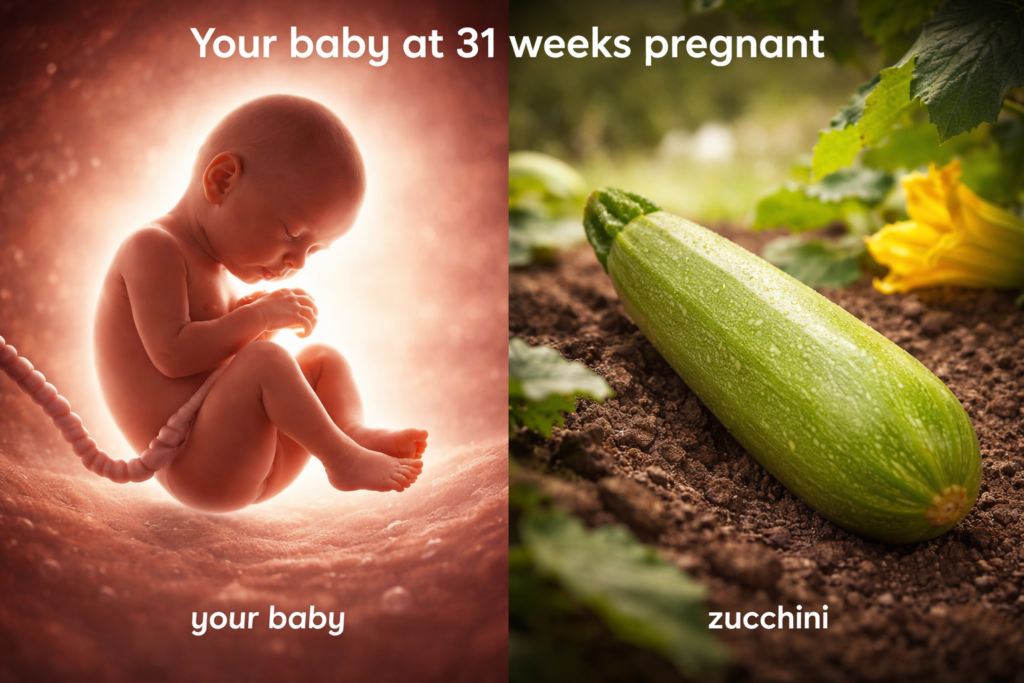
The baby’s space in the mother’s womb is gradually decreasing, so its active movements and the feeling of kicking are becoming more evident. The mother can often feel small pushes or rotations inside the abdomen. Proper nutrition, adequate rest and regular medical advice during this period help ensure the healthy growth of the baby. Peace of mind and proper care make the baby’s development safer and more beautiful.
31 Weeks Pregnancy is how many months?
A 31 weeks pregnancy is usually equal to about 7 months. However, if you divide the pregnancy into 9 full months, you can see that each month is about 4.3 weeks. So at 31 weeks, the mother and baby’s body are going through a lot of changes. At this time, the baby weighs about 1.3–1.5 kg and is about 38–40 cm long. The baby’s brain and nervous system are developing more rapidly, which will strengthen its sensory and learning abilities after birth. The ability to open and close its eyes is improving, and the lungs are gradually preparing to breathe air.
Many changes can also be observed in the mother’s body at 31 weeks. A growing belly, pain in the legs and back, fatigue, and hormonal fluctuations are normal. Adequate rest, a balanced diet, and light exercise are important for the healthy growth of the baby and the mother’s comfort during this period. Regular ultrasound examinations and medical consultations should be taken, so that the health of the mother and baby is good. Care and awareness at this stage make pregnancy more beautiful and safe.
Pregnancy Time Calculator
30 week ultrasound
The 31 week ultrasound is an important test in the third trimester of pregnancy. During this time, the doctor checks the baby’s growth, weight, head circumference, and abdominal size to ensure that the baby is developing normally. The baby’s heartbeat, movements, breathing movements, and the amount of amniotic fluid are also monitored. Sometimes the baby’s position (head down or up) and the position of the placenta are also seen, which helps in planning the delivery.
This ultrasound also reviews the development of the baby’s organs such as the brain, kidneys, heart, and lungs. If the baby’s growth is slow or fast, or there are problems with the amount of fluid, the doctor may recommend additional tests or special care. This scan becomes even more important if the mother is at risk for diabetes or high blood pressure. Regular checkups and accurate reports keep the pregnancy safe.
What to expect at 31 Weeks Pregnancy
During the 31 weeks pregnancy, many important changes occur in the body of the mother and the baby. During this period, the baby weighs about 1.5–1.8 kg and is about 40–42 cm long. The baby’s brain develops rapidly and the lungs become more mature, making it easier to breathe after birth. The baby’s movements are more clearly felt and sometimes there may be a feeling of hiccups.
The mother’s body may experience shortness of breath, heartburn, sleep problems and back pain due to the large belly at this time. There may also be swelling of the legs, frequent urination and Braxton Hicks contractions. Drinking enough water, light walks, healthy food and getting enough rest are very important during this period. Regular doctor check-ups are important for a safe pregnancy.
Your Pregnant Belly at 31 Weeks
At 31 weeks pregnant, your pregnant belly will look bigger and more rounded than before. The uterus is growing rapidly at this time, which can make your stomach feel tight and increase the likelihood of stretch marks. Many mothers may notice that their belly button is slightly protruding and the skin on their stomach may feel dry or itchy. The baby’s movements are also more noticeable at this time, as small waves can be seen on the surface of the abdomen.

This week, it is normal to experience lower back and back pain, discomfort when walking, and a feeling of heaviness due to the weight of your belly. Frequent urination, mild shortness of breath, or heartburn may occur as the baby’s position puts pressure on the upper abdomen. Wearing loose clothing, drinking plenty of water, and regular light exercise are beneficial for comfort. Adequate rest and proper nutrition are important for the baby’s growth.
What is the baby’s position at 31 Weeks Pregnancy?
At 31 weeks pregnancy, the baby’s position usually begins to gradually prepare for birth. At this time, many babies are in the Head Down/Cephalic Position, which is the safest position for birth. However, some babies may still be in a variable position. Some may be in a Transverse or Breech position, which is not uncommon this week. Although the baby’s movements may seem relatively low, he or she is moving his or her arms and legs regularly inside.
At this time, if the baby’s head is usually towards the pelvis, the mother may feel pressure in the lower abdomen and the urge to urinate may increase. On the other hand, if the baby’s feet or hands are upwards, there may be a feeling of pressure under the chest or near the ribs. The exact position of the baby can be determined through ultrasound. Most babies permanently move their head down between 34–36 weeks.
Checklist at 31 Weeks Pregnancy
At 31 weeks pregnant, your baby is growing quickly and your body is preparing for delivery. This checklist will help you stay organized, comfortable, and healthy during this stage.
Tips for 31 Weeks Pregnancy
A 31 weeks pregnancy means you are now in the crucial third trimester. During this time, the baby’s growth is rapid and the body is slowly preparing for birth. The mother’s body also experiences several changes, such as a heavy stomach, trouble sleeping, difficulty breathing, back pain or swollen feet. It is very important to take care of yourself and maintain healthy habits during this time, as the next few weeks can be more sensitive for the mother and baby. Proper nutrition, adequate rest and regular doctor’s advice will make this time much easier and safer.
1. Drink enough water
At 31 weeks, the body’s blood flow increases and the baby needs enough fluids. Therefore, it is very important to drink enough water every day. Drinking less water can lead to dehydration, which increases problems like dizziness, constipation and burning sensation in the urine. Sometimes, drinking less water can also lead to urine infections, which are risky during pregnancy. So try to drink at least 8-10 glasses of water every day and you can have fruit juice or coconut water occasionally.
2. Ensure nutritious food
During this period, the baby’s bones, brain and lungs grow rapidly. Therefore, it is very important to have protein, calcium, iron and folic acid in the food. Regular consumption of milk, eggs, fish, pulses, vegetables and fruits keeps the baby healthy and also maintains the mother’s energy. At the same time, it is better to eat less fried foods, soft drinks and excess sweets, as these can cause rapid weight gain and increase the problem of gas or heartburn.
3. Give importance to sleep and rest
Many mothers have trouble sleeping at 31 weeks, because the stomach becomes difficult to sleep properly due to the growth of the stomach. In addition, sleep may be disturbed due to the baby’s movements and hormonal changes. Try to sleep on the left side, because this improves the baby’s blood flow and facilitates the mother’s breathing. You will get more comfort if you use a pillow under the head and between the legs. If you do not get enough rest, the body becomes weak and mental stress can also increase.
4. Continue light exercise and walking
It is very beneficial to do light walking or pregnancy yoga during this time instead of resting completely. Light exercise keeps blood circulation good, reduces swelling in the legs and prepares the body for delivery. However, if you feel too tired or dizzy while exercising, rest immediately. Heavy work or excessive running should not be done at all. Walking for 15–20 minutes every day gives very good results if the doctor allows it.
5. Take measures to reduce back and waist pain
At 31 weeks, the increase in the weight of the baby puts pressure on the mother’s back and waist. As a result, pain or discomfort is very normal. Practice sitting and standing in the right posture. Do not lift anything heavy and do not stand in one place for a long time. Using a warm water bath, light massage or a pregnancy belt as recommended by the doctor can reduce the pain.
6. Monitor the baby’s movements
The baby’s movements are felt relatively more clearly at this time. It is important to keep an eye on the baby’s movements every day. Usually, it is a good sign to feel movement at least 10 times a day. If the baby’s movement suddenly decreases or is not felt at all, then contact the doctor without delay. Monitoring the baby’s movement is an important part of pregnancy safety.
7. Be aware of the signs of pre-term labor
In some cases, labor pains may start early at 31 weeks, which is called pre-term labor. If there is regular pain in the lower abdomen, pressure in the waist, water breaking, bleeding or excessive discharge, then it should not be neglected. Many times, these symptoms may seem mild at first, but the risk may increase later. Therefore, it is the safest decision to go to the hospital quickly if any unusual symptoms occur.
8. Keep stress low
At this time, many mothers feel anxious, afraid or overly worried about delivery. But excessive stress can also affect the baby. So try to keep yourself calm, spend time with your family, listen to light music, read books or pray. Adequate rest and positive thoughts will keep you mentally strong.
9. Continue regular doctor’s checkups
A doctor’s checkup is very important at 31 weeks because at this time the baby’s growth, heartbeat, mother’s pressure and sugar level are monitored. Sometimes the risk of high blood pressure or gestational diabetes increases. Regular checkups can detect problems early and make treatment easier. The tests or ultrasounds given by the doctor should be done on time.
10. Start preparing for delivery
It is good to have a hospital bag ready from 31 weeks. Keeping the baby’s clothes, diapers, mother’s essentials and medical reports together reduces stress in an emergency. It is also important to select the delivery hospital, save the doctor’s number and keep the family mentally prepared. Making these preparations in advance reduces panic or problems at the last minute.
31 weeks of pregnancy is a time when the baby’s growth is rapid and the mother is gradually preparing for delivery. Therefore, maintaining a healthy diet, adequate rest, regular checkups and peace of mind are the most important. It is safe to consult a doctor quickly without ignoring any unusual changes in your body.
Conclusion
As the baby grows rapidly at 31 weeks, the mother’s body also slowly starts preparing for delivery. During this time, the baby’s movements are felt more clearly, which is an important signal for the mother as well as a joy. Mild Braxton Hicks contractions, swollen legs, heartburn or some difficulty breathing – these symptoms are usually normal. However, if the pain is severe, sudden excessive swelling appears or the baby’s movements decrease, then you should consult a doctor without delay.
To stay safe and healthy during this time, it is very important to drink enough water, eat a balanced and nutritious diet and do regular light exercise. In addition, reducing stress and staying positive is helpful for the well-being of the mother and the baby. Regular ultrasounds and doctor’s checkups can confirm the baby’s growth and position. With proper care and awareness, it is possible to pass this time safely and comfortably.